
What Is the Difference Between Leaded Glass, Leadlight and Stained Glass?
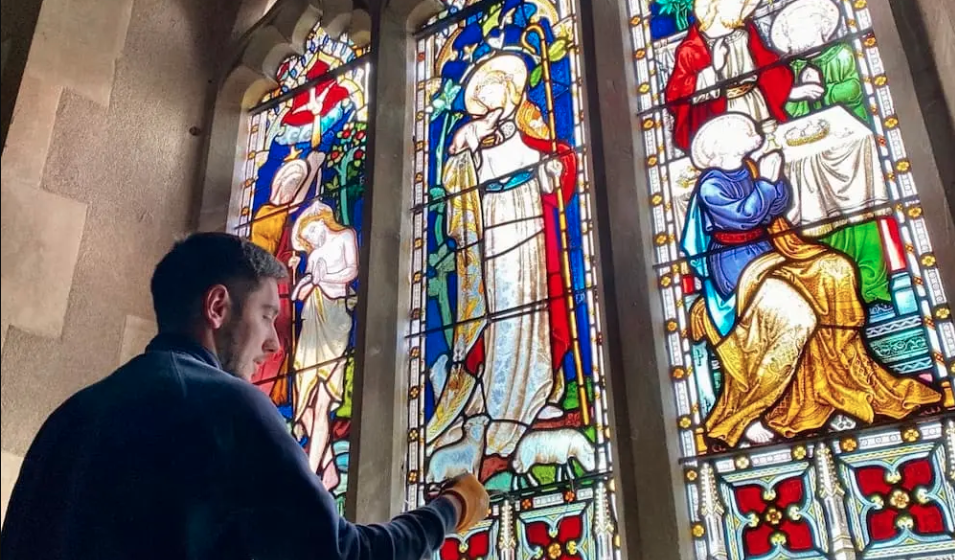
One of the questions we're often asked at Sherriff is what the difference actually is between leaded glass, leadlights and stained glass. Having worked with traditional glazing for decades, we know just how easily these terms can cause confusion, particularly when customers are looking to restore original windows or recreate traditional designs.
If you've ever looked into repairing, restoring or replacing traditional windows, you've probably come across these terms. They're often used interchangeably, but do they actually mean the same thing?
Not quite.
Although these traditional glazing styles share many similarities, there are important differences in how they're made, how they look and where they're typically used.
In this guide, we'll explain what each term means, explore the key differences and clear up some common misconceptions. We'll also look at how to identify the glazing in your own property, what to consider when repairing or replacing traditional windows, and how to choose an appropriate solution that preserves the character of your building.
What Is Leaded Glass?
Leaded glass refers to a traditional method of glazing in which individual pieces of glass are joined together using narrow strips of lead, known as lead cames. Each piece of glass is carefully cut to fit a particular pattern before being assembled within the lead framework. The joints are then soldered, and the panel is sealed to provide strength and weather resistance.
One of the most recognisable examples is the traditional diamond-patterned window, often found in Tudor-style properties, historic cottages and period homes. However, leaded glass windows aren't limited to diamond designs. Rectangular panes, geometric patterns and more elaborate arrangements can all be created using the same technique. Leaded glass can incorporate clear, textured or coloured glass, making it suitable for both traditional and decorative applications.
Common characteristics of leaded glass windows include:
- Individual glass panes joined by traditional lead cames.
- Diamond, rectangular or other geometric patterns.
- Clear, textured or coloured glazing.
- Designs suitable for historic buildings and contemporary properties.
- Traditional construction techniques that allow for specialist repair and restoration.
For many property owners, leaded glass provides an effective way to retain architectural character without introducing highly decorative glazing.
What Are Leadlight Windows?
A leadlight, also written as leaded light, is essentially a traditional leaded glass window.
The word light is an architectural term for a glazed opening or individual section of a window. When the glass is assembled using lead cames, it is commonly referred to as a leaded light or leadlight. In practice, leaded glass windows and leadlight windows often describe the same type of glazing. The term leadlight is particularly associated with traditional windows featuring clear or lightly textured glass arranged in diamond or rectangular patterns.
You'll frequently find examples in historic cottages, Tudor and Jacobean buildings, country houses and other period properties.
Are Leadlights Always Made With Clear Glass?
No. Although leadlights are often associated with clear glass, they can also incorporate textured, coloured or decorative pieces. The defining feature is the lead framework holding the individual glass pieces together, rather than the colour of the glass itself. This is why a traditional leadlight can sometimes include stained or coloured glass without becoming an entirely different type of window.
What Is Stained Glass?
Stained glass is generally associated with decorative glazing that uses colour, painted details or artistic designs to create a particular visual effect. Unlike the relatively simple geometric patterns often found in traditional leadlights, stained glass may feature intricate illustrations, floral arrangements, heraldic designs, abstract patterns or pictorial scenes. Historically, stained glass was frequently produced using coloured glass and specialist paints or stains that were fired onto the glass in a kiln. Individual pieces were then assembled, often using the same lead came techniques found in traditional leaded windows.
This is where the terminology can become confusing.
A stained glass window can also be a leaded glass window. The stained glass describes its decorative characteristics, while the leadwork describes how the individual pieces are held together. Today, the term stained glass is also widely used for decorative panels made using coloured glass, even where no painted or fired details are present.
Where Is Stained Glass Typically Used?
Stained glass has a long history in churches, cathedrals and historic buildings, but it is also widely found in domestic properties.
Examples include:
- Victorian and Edwardian entrance doors.
- Decorative fanlights and hallway windows.
- Period stairwell windows.
- Traditional churches and places of worship.
- Bespoke decorative windows in residential properties.
Stained glass can be restored to preserve an original design or commissioned to create something entirely new.
Leaded Glass vs Leadlight vs Stained Glass: The Key Differences
Although the terminology overlaps, the following comparison provides a useful starting point.
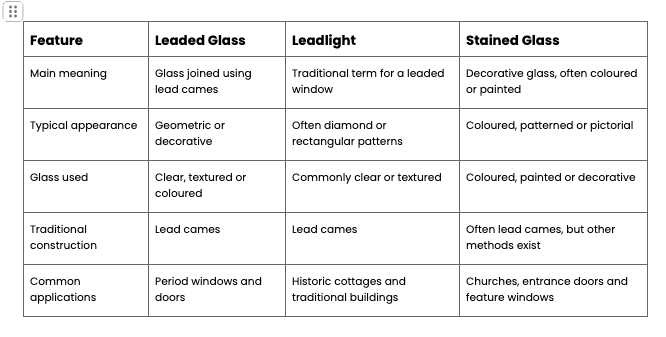
The simplest way to remember the difference is that leaded glass and leadlights are closely related terms, while stained glass generally refers to the decorative glass itself. A window can therefore be both leaded and stained glass.
How Can I Tell Which Type of Window I Have?
If your property already has traditional glazing, there are several features that may help you identify it.
Look at the Pattern
Windows featuring small diamond-shaped or rectangular panes held together with lead strips are commonly described as leaded lights. If the window includes detailed imagery, coloured patterns or decorative painted glass, it may also be described as stained glass.
Examine the Glass
Traditional leaded windows often contain clear glass, sometimes with subtle variations in texture, thickness or appearance. Stained glass may contain coloured pieces, painted details or decorative finishes. However, colour alone isn't enough to identify the construction method.
Consider the Age and Style of Your Property
The architectural period can provide useful clues. Tudor and Jacobean properties are particularly associated with traditional leaded lights, while decorative stained glass became a prominent feature of many Victorian and Edwardian homes. Of course, windows may have been replaced or altered over time, so the age of the building doesn't necessarily establish the age of its glazing.
Ask a Traditional Glazing Specialist
If you're unsure what type of glazing you have, a specialist can examine the glass, leadwork, construction and condition. This is particularly important when dealing with original windows in historic or listed buildings, where preserving existing materials and traditional craftsmanship may be essential.
Can Leaded Glass and Stained Glass Windows Be Repaired?
Yes. In many cases, traditional leaded glass and stained glass windows can be repaired or restored rather than completely replaced. The appropriate approach depends on the condition of the glass, leadwork and supporting structure. Common problems include cracked or missing panes, deteriorating lead cames, loose joints, bowed panels and damage caused by age or exposure. Where possible, specialist restoration aims to retain original materials and preserve the character of the window. Individual pieces of glass may be repaired or replaced, while more extensive deterioration can require careful dismantling and re-leading. For historic or listed properties, the significance of the existing glazing should be assessed before repairs or alterations are undertaken.
Can You Have New Leadlight Windows Made?
Absolutely. Traditional leadlight windows are not limited to historic buildings or restoration projects.
New leaded windows can be designed and manufactured using established techniques, allowing homeowners to recreate period glazing or introduce traditional detailing into a newer property. Designs can be tailored to the architectural style of the building, including the size and arrangement of the glass panes, the lead pattern and the type of glass used.
For owners of period properties, bespoke leaded windows can also provide an appropriate solution where original glazing has been lost or damaged beyond repair. The aim is to create windows that look and feel appropriate to the property, rather than introducing a design that appears out of place.
Which Type of Glazing Is Right for Your Property?
Choosing between traditional leaded glass and more decorative stained glass largely depends on your property, the existing windows and the result you want to achieve.
For a historic cottage or Tudor-style home, simple diamond-patterned leadlights may be the most appropriate choice. For a Victorian entrance door or an Edwardian hallway, decorative stained glass may be more in keeping with the building's original design. If you're restoring existing windows, preserving their original materials, appearance and craftsmanship should usually be the starting point. There isn't necessarily one option that's better than another. The important thing is understanding the differences and choosing a solution that respects the character of your property.
Frequently Asked Questions
- Is leaded glass the same as stained glass?
- Not exactly. Leaded glass describes glass panels assembled using lead cames, while stained glass generally refers to decorative, coloured or painted glass. A stained glass window may also be leaded if its individual pieces are joined using lead cames.
- What is another name for leaded glass windows?
- Leaded glass windows are commonly called leadlights, leaded lights or lead windows. The terms are frequently used interchangeably, particularly when describing traditional windows featuring diamond or rectangular glass panes.
- Are leadlights and leaded windows the same thing?
- Yes, in most traditional glazing contexts. Both terms describe windows constructed from individual pieces of glass held together using lead cames.
- Do leadlight windows have to contain coloured glass?
- No. Leadlight windows can be made using clear, textured or coloured glass. Many traditional leadlights use clear glass arranged in diamond or rectangular patterns.
- Are all stained glass windows made with lead?
- No. Although traditional stained glass windows commonly use lead cames, other construction methods exist, including copper foil techniques. The term stained glass does not automatically mean that lead has been used.
- Can traditional leaded windows be double glazed?
- In some circumstances, traditional leaded glazing can be incorporated into a double-glazed solution or combined with suitable secondary glazing. The options depend on the existing window, its frame, the building's requirements and any heritage restrictions. A specialist assessment is recommended before making alterations.
- Can old leadlight windows be restored?
- Yes. Many old leadlight windows can be repaired or restored, depending on their condition. Specialist work may include replacing damaged glass, repairing leadwork, re-leading panels or addressing structural deterioration while retaining original materials wherever practical.
Traditional Leaded Windows and Specialist Restoration by Sherriff
Whether you're looking to restore original leadlights, repair damaged leaded glass or commission new windows for a period property, understanding the terminology is a useful first step. At Sherriff, we specialise in traditional glazing and we work with property owners to preserve and recreate windows that complement the character of their buildings. From straightforward geometric leadlight designs to more intricate decorative glazing, our team can help you understand your options and identify an appropriate solution.
Looking for advice about your existing windows or planning a new project? Contact Sherriff to discuss your requirements with our specialist team.
